2024 Resilience
2024 · Sarajevo · Bosnia and Herzegovina
The Artnauts as a Social Sculpture
The ARTNAUTS Collective is dedicated to exhibiting in international venues in countries of contention. We transcend traditional art practices that only confine themselves to having art exhibitions. In the tradition of Joseph Beuys, we approach our exhibitions as “social sculptures.” The exhibition itself is just a vehicle for having a dialogue on transforming society.
To achieve our objectives, we first choose a theme that resonates with the country of contention derived from research and/or input from those in the host country. The theme is addressed by artists visualizing how this theme is exemplified in our country but that has similarities to what is happening in the host country. The ARTNAUTS produce art regarding a theme related to what we perceive to be happening in the United States on a personal (psychological), social, regional, national, or international level. Moreover, the theme generates dialogue with the host country on their perceptions of what is happening in their own respective country.
Though most exhibitions would consider the endpoint of their objectives to be fulfilled with an art exhibition, this is just the beginning for the ARTNAUTS. The idea of social sculpture consists of dialoging for social change with others attending the exhibition at the venue and beyond it. We want to know what is happening in their country. To do this, we meet with artists at the venue and beyond it to talk about social conditions. In addition, we meet with families (often in their own homes) to talk to several generations, soliciting their perspectives and sharing with them the philosophy of the ARTNAUTS. In the tradition of Beuys, this is a social sculpture that was precipitated by the art exhibition.
Our social sculpture does not end there. We seek to build lasting relationships that extend well beyond said exhibition. We return in the following year (and often years) with other exhibitions that address themes generated by previous discussions. And we repeat the process.
We build relationships based on common interests rooted in social change. We get to know these artists and community members as friends. Through our friends, we meet other artists and community members extending the reach of our conversations. To this end, we consider ourselves the best ambassadors of what is “good” in American society. We use art as a bridge for dialogues about social transformations that we have in common in the human condition to extend the power of art well beyond traditional art practices.
— George Rivera, Ph.D., Professor Emeritus, University of Colorado at Boulder
Dr. Rivera's Artwork in this Exhibition
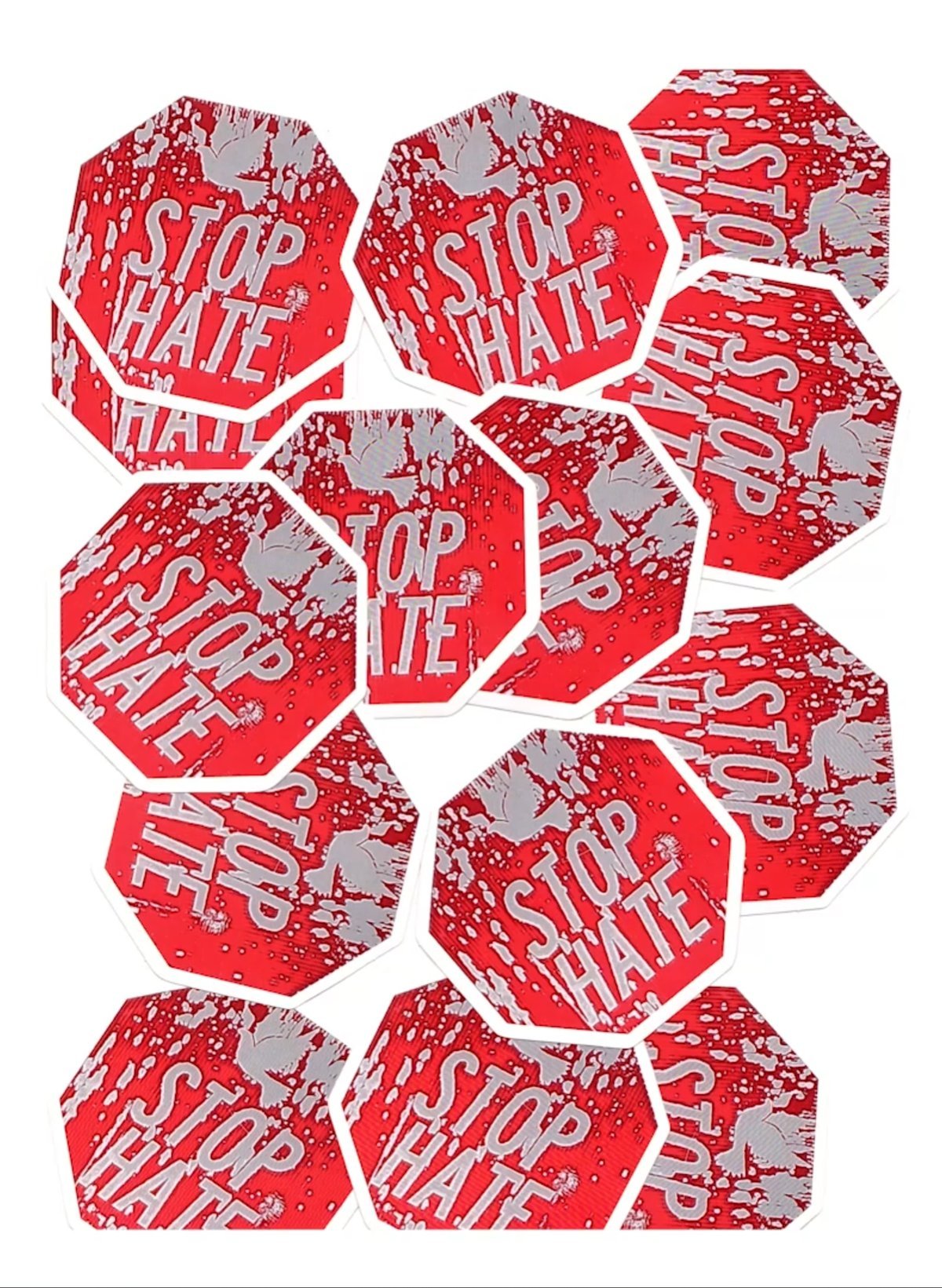
Stop Hate, 2024